Now is the Right Time!
As a parent or someone in a parenting role, you play a crucial role in your child’s success. There are intentional ways to grow a healthy parent-child relationship. Developing your child’s skills to manage anger presents a perfect opportunity.
Children ages 5-10 are in the process of learning about their strong feelings. They do not understand the physical and mental takeover that can occur when they are angry. Feeling out of control because of anger can be scary and add to the length and intensity of their upset. It is critical to learn how to deal with anger without suppressing it or expressing it by hurting others or themselves. Your support and guidance matter greatly. Research confirms that when young children learn to manage their feelings, their executive functions are simultaneously strengthened.1 They can better use self-control, problem-solve, and focus their attention. This directly impacts their school success. However, the opposite is also true. Those children who do not learn to manage their feelings through the guidance and support of caring adults may have attention issues and difficulty problem-solving.
What does it mean to manage one’s feelings? Having emotional management skills means having the ability to identify and understand one’s emotions to enable one to have a choice over the behaviors they engage in even while feeling big emotions. Your child is only beginning to learn this difficult task of understanding their feelings, expressing them in healthy ways, and using skills that help them not feel overtaken by emotions. Thus, they need your help to develop these skills.
Anger is not bad or negative. You should not avoid or shut down the experience of it in your child. There’s a good reason for it. Everyone has experienced someone who has lost control and acted in ways that harmed themselves or others when they were angry. However, every feeling, including anger, serves a critical purpose. Anger provides essential information about who you are, what emotional or physical needs are not being met, and where your boundaries lie. Understanding this often misunderstood emotion is key to helping your child better understand themselves and learn healthy ways to manage their intense feelings.1 Everyone faces challenges with feeling overcome by anger. Your child may slam their bedroom door as they refuse to tell you what is happening and why they are so upset. Or, you may hear from a teacher that your child has kicked another child on the playground. Anger may cover hurt, humiliation, fear, and stress. It may also mask guilt, shame, grief, or envy. It could be the tip of an iceberg with a mass of frustration below. As a parent or someone in a parenting role, you play an essential part in helping your child connect to a greater understanding of their experience as they learn to identify their feelings and needs better.
Why Anger?
Whether your five-year-old breaks down in frustration over trying to tie their shoes by themselves or your ten-year-old stays up late angry that a friend refused to play with them, learning how to manage anger and its many accompanying emotions can become a regular challenge if you don’t create plans and strategies for coping with and making space for these big emotions.
Today, in the short term, learning to manage anger can create
- a sense of confidence that you can help your child regain calm and focus
- trust in each other that you have the competence to make space for your big feelings in healthy ways and
- added daily peace of mind
Tomorrow, in the long term, your child
- builds skills in self-awareness
- builds skills in self-control and managing feelings and
- builds assertive communication to communicate needs and boundaries critical for keeping them healthy and safe
Five Steps for Managing Anger
This five-step process helps you and your child manage anger. It also enables you to build essential skills in your child. The same process can also address other parenting issues (learn more about the process).
Tip: These steps are done best when you and your child are not angry, tired, or in a rush.
Step 1 Get Your Child Thinking by Getting Their Input
You can get your child thinking about ways to make constructive choices about their behaviors when angry by asking them open-ended questions at a time when your child is calm. You’ll help prompt your child’s thinking. You’ll also better understand their thoughts, feelings, and challenges related to coping with their anger so that you can address them. In giving input, your child
- has the opportunity to become more aware of how they are thinking and feeling and understand when the cause of their upset is anger-related
- can think through and problem-solve any challenges they may encounter ahead of time
- has a more significant stake in anything they’ve thought through and designed themselves, and with that sense of ownership comes a greater responsibility for implementing new strategies and
- will be working with you on making decisions and understanding the reasons behind those decisions about critical aspects of their life
Actions
- Be curious about your child’s feelings. You might start by asking questions like:
- “When do you feel angry?”
- “What time of day?”
- “What people, places, and activities are usually involved?”
- Use your best listening skills! Remember, what makes a parent angry can differ significantly from what angers a child. Listen closely to your child’s concerns without projecting your thoughts and feelings. You will know you are in your best listening state if you are genuinely curious about your child’s point of view.
- Explore the mind-body connection. In calmer moments with your child, ask, “How does your body feel now?” See how descriptively they can list their physical signs of well-being. Next, ask, “How does your body feel when angry?” Every person’s physical experience will be different. Find out how your child feels and make the connection between those symptoms and the usual feelings they are having.
Trap: Be sure you talk about anger at a calm time when you are not stressed or upset.
Because intense feelings like anger and hurt occur as you go about your daily life, you may not consider their role and impact on your child. Intense feelings can significantly influence the day and your relationship with your child. Learning about what
developmental milestones your child is working on can help you better understand what your child is going through and what might be contributing to their anger or frustration. Here are some examples:
2
- Five-year-olds are working hard to understand how things work, so they appreciate explanations and ask lots of questions. They are working hard to understand rules and want to help, cooperate, and follow them. They may be upset or disappointed when they do not understand a rule or struggle to show competence. They may get angry if they break a rule or see others breaking it. They are also beginning to test rules as they move from five to six, which can prompt a parent’s anger.
- Six-year-olds can feel anxious as they want to do well in school and at home. They may be highly competitive and criticize peers while being sensitive to being criticized themselves. They care about friendships and may have upset feelings related to those relationships.
- Seven-year-olds need consistency and may get angry and feel out of control when chaotic schedules and routines change. They may be moody and require reassurance from adults. They take school and homework seriously and may even feel sick from worrying about tests or assignments. They can take academic failure personally, get angry, and push away or neglect their work to avoid more failure.
- Eight-year-olds are interested in and invested in friendships. They seek peer approval and can be upset when friends reject them. They have a greater social awareness of local and world issues and may be concerned about the news or events outside their community.
- Nine-year-olds can be highly competitive and critical of themselves and others. They may worry about who is in the “in” and “out” crowds and where they fit in friendship groups. They may tend to exclude others to feel included in a group, so it’s an excellent time to encourage inclusion and kindness toward a diverse range of others. They may be just beginning puberty. They will be experiencing growth spurts and the associated clumsiness and awkwardness. Anger can be a result of rejection or judgment from peers.
- Ten-year-olds have an increased social awareness and try to figure out the thoughts and feelings of others. With this awakening comes a newfound worry about what peers think of them (for example, “He’s staring at me. I think he doesn’t like me.”). They can become angered if they feel judged, even if they are making inaccurate predictions of peers’ feelings. They also seek more independence from their parents, so they can get angry when their parents treat them as they were in their younger years or make them feel dependent (taking away some of their power).
Remember that teaching is different than just telling. Teaching builds basic skills, grows problem-solving abilities, and prepares your child for success. Teaching also involves modeling and practicing the positive behaviors you want to see, promoting skills, and preventing problems.
Actions
- Learn together! Anger and hurt are essential messages to pay attention to. They mean emotional, social, or physical needs are unmet or necessary boundaries (rules, values) are violated. It’s important to ask, “Why am I feeling this way? What needs to change to feel better?”
- Understand your mind when angry. Anytime you are emotionally shaken from fear, anxiety, anger, or hurt, you are functioning from the part of your brain that developed first
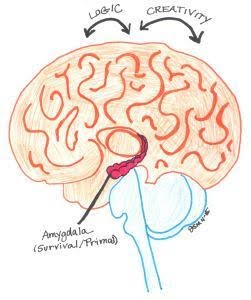 — the primal brain. During these intense feelings, a chemical washes over the rest of your brain and cuts off access so that your only functioning abilities are in your survival center. This “hijacking” of your brain, as Daniel Goleman, author of Emotional Intelligence, refers to it, serves a critical role.3 In actual survival circumstances, you can focus on fighting, fleeing, or freezing. If a tiger is hunting you, your mind focuses immediately on running away. Your body surges with hormones, such as adrenaline, that give you an extra energy boost. A high level of anger can quite literally paralyze thinking. Effective problem-solving requires logic, language, and creativity, though none can be well utilized when greatly upset. But in family life, fighting with words or actions or fleeing out the door is often not constructive, safe, or practical. Creating a plan (as discussed below) for what each member can do when they are in this state of mind and practicing it can prepare all members to act with emotional intelligence during a crisis, big or small.
- As a parent or someone in a parenting role, expressing anger, such as yelling, will not dissipate it. Research confirms that the expression of aggression, whether it’s yelling or hitting (and that includes parents hitting, yelling, or spanking), exacerbates the anger.2 Furthermore, if they see those methods used, your child will learn to model those behaviors, such as yelling and hitting. Expressing your anger physically will also erode your child’s trust in you.
- Model behaviors, and your children will notice and learn.4 Here are some ways to deal with your own upset or anger.
- Create a plan. This is critical so you’ll know exactly what you’ll say, where you’ll go to calm down, and what you’ll do and consider when calming down. Then, prepare your family so they understand your plan, will recognize it when they see it, and can learn from it.
- Recognize your anger. This self-awareness can come from several cues. Take note of physical symptoms when they happen. It can cue you to calm down before choosing your next words or actions. Notice the signs, discuss what your child notices, and take the following steps.
- Breathe first. Slowing down your breathing helps with calming down.
- Walk outside. The fresh air helps you breathe better, and the natural surroundings instantly calm.
- Distract yourself. Research has found that distraction can help calm rage. Reading a book or listening to music can help.
- Write. Writing down your angry thoughts (versus ruminating about them) can allow you to reevaluate your situation. You can reframe it, look at it from another perspective, or search for the good in it. Reflecting in your writing on what you can learn from the situation has a calming effect.
- Brainstorm coping strategies. You and your child can use numerous coping strategies depending on what feels right. But, when you are angry and upset, recalling what will make you feel better can be challenging. That’s why brainstorming a list, writing it down, and keeping it ready can be useful when your child needs it. Here are some ideas from the author of “Coping Skills for Kids,” Janine Halloran.5 Imagine your favorite place, take a walk, drink water, take deep breaths, count to 50, draw, color, and build something. Use this as a modeling opportunity and make a list of coping skills you will use for yourself the next time you feel angry or frustrated.
- Work on your family feelings vocabulary. Parents and those in a parenting role sometimes have to become feelings detectives. You must dig for clues if your child shuts down and refuses to tell you what’s happening. Though your five, six, seven, or even ten-year-old has spoken fluently for some time, they take longer to develop their feelings vocabulary. They hear feelings in daily conversations less frequently than thoughts or other expressions. Identifying your emotions is necessary to become more self-aware and understand your needs.
- Play feelings guessing games with the family. At a meal, share facial expressions showing a range of feelings and guess what they are. Or, ask each family member what they did today and see if you can guess their feeling from their expression.
- Create a safe base. In a time when your child is not upset, talk about what makes your child feel better and offers comfort. Create a “safe base” with your child — a place in the house where your child can choose to go when they want comfort. Maybe their calm-down space is a beanbag chair in their room, a blanket, or a special carpet in the family room. Then, consider what items you might place there to help calm down.
- Teach your child how to stop rumination. If you catch your child uttering the same upsetting story repeatedly, your child’s mind has hopped onto the hamster wheel of rumination. In these times, it can be challenging to let go. Talk to your child about the fact that reviewing the same concerns over and over will not help them resolve the issue, but talking about them might help, calming down might help, and learning more might help. Setting a positive goal for change will help. Practice what you can do when thinking through the same upsetting thoughts.
- Reflect on your child’s anger so you can be prepared to help. When reflecting on your child’s feelings, you can think about unpacking a suitcase. Frequently, layers of emotions must be examined and understood, not just one. Anger might just be the top layer. So, after discovering why your child was angry, you might ask about other layers. Was there hurt or a sense of rejection involved? Perhaps your child feels embarrassed? Fully unpacking the suitcase of emotions will help your child feel better understood by you as they become more self-aware. Ask yourself:
- “What needs is my child not getting met?” Their needs can be emotional, like a friend listening or giving them attention; they need some alone time or escape a chaotic environment.
- “Can my child address the issue alone, or do they need to communicate a need, ask for help, or set a boundary?” One of the most challenging steps for many is asking for help or drawing a critical boundary line when needed. You’ll need to determine the issues in your reflections with your child first. Then, it’s critical to guide them in communicating their needs.
- Help your child to repair harm when needed. A critical step in teaching your child about anger is learning how to repair harm when they’ve been overcome by anger and have hurt others. Mistakes are an essential aspect of their social learning. Everyone has moments when they hurt another. But, it’s that next step that they take that matters in repairing the relationship.
- Find small opportunities to help your child mend relationships. Siblings offer a regular chance to practice this. If there’s fighting, talk to your child about how they feel first. When you’ve identified that they had a role in causing harm, brainstorm together how they might make their sibling feel better. You might ask, “What could you do?”
- Allow your child to supply answers. You may be surprised at how many options they come up with. Support and guide them in selecting one and following through.
- Teach assertive communication through I-messages. When you or your children are uncomfortable disagreeing or arguing with another, knowing how to respond in ways that won’t harm yourself or your child can be challenging. That’s why teaching and practicing I-messages can provide a structure for what you can say. This statement works effectively from partner to partner, parent to child, and child to child. Here’s an example: “I feel _______________________(insert feeling word) when you_________________ (name the words or actions that upset you) because____________________________________.”
- Here’s how it might sound if you use it with your child: “I feel frustrated and angry when you keep playing and seem like you are ignoring me because I believe what I have to say is important for both of us.”
- If you are helping your child use this in communicating with a friend who has angered them, here’s how it might be used: “I feel angry when you play with Martin instead of me because I was counting on playing with you, and now, I have no one to play with.”
- Create a ritual for expressing gratitude so that it happens and becomes a habit. You might say what you are grateful for before each family meal together. Or, leave a chalkboard up to write down grateful words and statements. Or, you can make it a part of your bedtime routine while talking before your child goes to sleep. Ending the day reflecting on the goodness in your life could be the best way to send your child to sleep. Psychologists have researched gratefulness and found that it increases people’s health, sense of well-being, and ability to get more and better sleep at night.6
Tip: Deep breathing is more than just a nice thing to do. It removes the chemicals that have flowed over your brain so that you regain access to your creativity, language, and logic rather than stay stuck in your primal brain. Practicing deep breathing with your child can offer them a powerful tool anytime, anywhere, when they feel overwhelmed with heated emotions.
Step 3 Practice to Grow Skills and Develop Habits
Practice can be pretend play, cooperatively completing the task together, or trying out a skill with you as a coach and ready support. Practice is necessary for children to internalize new skills. That practice will help make vital new brain connections that strengthen each time your child performs the new action.
Actions
- Use “Show me…” statements and ask your child to demonstrate how to use a learned skill to manage anger. Say, “Show me how you use your safe base to calm down.” This can be used when you observe their upset mounting. Hint: your child may be more willing to play along if you incorporate a toy. You could say, “Show me where Doggie goes when he feels overwhelmed and needs a safe place to calm down.”
- Recognize effort using “I notice…” statements like, “I notice how you took some deep breaths when you got frustrated. That’s excellent!”
- Accept feelings. If you will help your child become emotionally intelligent in managing their biggest feelings, it is important to acknowledge and accept their feelings – even ones you don’t like! When your child is upset, consider your response. You could say, “I hear you’re upset. You wanted to stay at the park longer, and I said we had to go before you were ready?” Remember, you can empathize with your child’s pain while imposing limits on behavior.
- Practice deep breathing. Because deep breathing is such a simple practice that can assist your child anytime, anywhere, it’s important to get plenty of practice to make it easy to use when needed. Here are some enjoyable ways to practice together!4
- Hot Chocolate Breathing. Pretend to hold your hot cup of hot chocolate in both hands in front of you. Breathe in deeply the aroma of the chocolate. Then, blow it out to cool it in preparation for drinking. Do this to the count of five to give your child practice. Then, look for chances to practice it regularly.
- Teddy Bear Belly Breathing. Balance a teddy bear on your child’s tummy and give it a ride with the rising and falling of their breath. This would be ideal to practice during your bedtime routine when you lie and want to calm down for the evening.
- Follow through on repairing harm. When your child has caused harm, they need your guidance, encouragement, and support to repair it. They may need to hold your hand through that process, and that’s okay! They are learning the invaluable skill of responsible decision-making. Also, remember that children learn from your modeling when you come to them and repair harm when you may have reacted from a place of anger or frustration.
- Include reflection on the day in your bedtime routine. You might ask, “What are your highs and lows of the day?” or “What are you looking forward to tomorrow?” You should answer the questions as well. Sharing highs and lows allows your child to share difficult moments and reflect on their day’s bright spots. Grateful thoughts are a central contributor to happiness and well-being.
Tip: Remember how you typically feel at the end of a long day before bedtime when you’ve gotten angry with your child or other loved one? You may be internally beating yourself up for your own words and actions. Consider that your child might do the same. End the day with love. Although they need to hear it every day, they need to hear that you love them NO MATTER WHAT on those days in particular. You can rest assured that making a point of doing it will add to their resilience and strength.
Step 4 Support Your Child’s Development and Success
At this point, you’ve taught your child some new strategies for managing anger so that they understand how to take action. You’ve practiced together. You can offer support by reteaching, monitoring, coaching, and applying logical consequences when appropriate. Parents naturally provide support when they see their child fumble with a situation they need help. This is no different.
Actions
- Ask key questions to support their skills. For example, “You are going to see Julie today. Do you remember what you can do if you get angry?”
- Learn about your child’s development. Each new age presents challenges, and being informed about your child’s developmental milestones promotes empathy and patience.
- Stay engaged. Working together on ideas for trying out new and different coping strategies can help offer additional support and motivation for your child when tough issues arise.
- Apply logical consequences when needed. Logical consequences should come soon after the negative behavior and need to be provided in a way that maintains a healthy relationship. Rather than punishment, a consequence is about supporting the learning process. First, get your own emotions in check. Not only is this good modeling, but when your emotions are in check, you can provide logical consequences that fit the behavior. Second, invite your child to discuss the expectations established in Step 2. Third, if you feel your child is not holding up their end of the bargain (unless they do not know how), apply a logical consequence as a teachable moment.
- If there are high emotions in your household on most days, most of the time, then it may be time to consider outside intervention. Physical patterns may begin to set in (feelings of depression) that require the help of a trained professional. Seeking psychological help is the same as going to your doctor for a physical ailment. The following are some resources to check out.
- American Academy of Child & Adolescent Psychiatry (AACAP) has definitions, answers to frequently asked questions, resources, expert videos, and an online search tool to find a local psychiatrist. http://www.aacap.org
- American Academy of Pediatrics (AAP) Healthy Children provides information for parents about emotional wellness, including helping children handle stress, psychiatric medications, grief, and more. http://www.healthychildren.org
- American Psychological Association (APA) offers information on managing stress, communicating with kids, making step-families work, controlling anger, finding a psychologist, and more. http://www.apa.org
- Association for Behavioral and Cognitive Therapies (ABCT) provides free online information so that children and adolescents can benefit from the most up-to-date information about mental health treatment and learn about important differences in mental health supports. Parents can search online for local psychologists and psychiatrists for free. http://www.abct.org
No matter how old your child is, your positive reinforcement and encouragement have a significant impact.
If your child is working to grow their skills – even in small ways – it will be worthwhile to recognize it. Your recognition can go a long way in promoting positive behaviors and expanding your child’s confidence. Your recognition also encourages safe, secure, and nurturing relationships — a foundation for strong communication and a healthy relationship with you as they grow.
There are many ways to reinforce your child’s efforts. It is essential to distinguish between three types of reinforcement: recognition, rewards, and bribes. These three distinct parenting behaviors have different impacts on your child’s behavior.
Recognition occurs after you observe the desired behavior in your child. Noticing and naming the specific behavior you want to reinforce is key to promoting more of it. For example,
“You were able to calm down after getting angry at your sister — I love seeing that!” Recognition can include nonverbal acknowledgment such as a fist bump, high five, or hug.
Rewards can be helpful in certain situations by providing a concrete, timely, and positive incentive for doing a good job. A reward is determined ahead of time so that the child knows what to expect, like “If you behave in the store, you will get a treat on the drive home.” (If you XX, then I’ll XX.) It stops any negotiations in the heat of the moment. A reward could be used to teach positive behavior or break a bad habit. The goal should be to help your child progress to a time when the reward will no longer be needed. If used too often, rewards can decrease a child’s internal motivation.
Unlike a reward, bribes aren’t planned ahead of time and generally happen when a parent is in the middle of a crisis (like in the grocery store checkout line and a child is having a tantrum. To avoid disaster, a parent offers to buy a sucker if the child will stop the tantrum). While bribes can be helpful in the short term to manage stressful situations, they will not grow lasting motivation or behavior change and should be avoided.
Trap: It can be easy to resort to bribes when recognition and occasional rewards are underutilized. If parents frequently resort to bribes, it is likely time to revisit the
five-step process.
Trap: Think about what behavior a bribe may unintentionally reinforce. For example, offering a sucker if a child stops a tantrum in the grocery store checkout line may teach the child that future tantrums lead to additional treats.
Actions
- Recognize and call out when things are going well. It may seem obvious, but it’s easy not to notice when everything moves smoothly. Noticing and naming the behavior provides the necessary reinforcement that you see and value your child’s choice. For example, when children complete their homework on time, a short, specific call out is all that’s needed: “I noticed you completed your homework today on your own in the time we agreed upon. Excellent.”
- Recognize small steps along the way. Don’t wait for big accomplishments—like the full bedtime routine going smoothly—to recognize effort. Remember that your recognition can work as a tool to promote more positive behaviors. Find small ways your child is making an effort and let them know you see them.
- Build celebrations into your routine. For example, after you’ve completed your bedtime routine, snuggle and read before bed. Or, in the morning, once you’re ready for school, take a few minutes to listen to music together.
Closing
Engaging in these five steps is an investment that will strengthen your skills as an effective parent on many other issues and develop essential skills that will last a lifetime for your child. Through this tool, children have opportunities to become more self-aware, deepen their social awareness, exercise their self-management skills, work on their relationship skills, and demonstrate and practice responsible decision-making.