Now Is the Right Time!
Experiencing stress is common for children and adults. Stress is the physical or mental response to an external cause, such as being yelled at by a frustrated sibling or finding a school assignment challenging. These feelings of stress are natural mechanisms for human survival. They are the body’s way of warning you when there is danger and alerting you to problems. A stressor can be one-time or ongoing. Anxiety is the body’s reaction to stress and can occur even if there is no current threat. If anxiety persists, it can begin to interfere with everyday life and impact your child’s health. As a parent or those in a parenting role, you can help your child identify and learn to manage their stress — a skill they will use throughout life.
Children ages 5-10 are learning about their strong feelings, understanding school rules, growing friendships, and mastering new concepts in reading, math, and more. All these new experiences and responsibilities can cause stress, which is typical for children.
In addition, most children also face more intense stress, like family challenges such as parents who divorce, have a mental illness, or deal with addiction. Many families have members who face intense stress due to the effects of systemic oppression, income inequality, lack of access to services, prejudices, stigma, or other injustices. Indeed, the support a child receives from trusted parents or those in a parenting role during and after stress can make a powerful difference in how that child copes and integrates that experience long term. With intentional guidance and support, parents or those in a parenting role can advance their children’s development to grow their inner strength and resilience.
Symptoms of stress may look differently in children than they do in adults. Children can experience mental and physical symptoms such as restlessness, fatigue, irritability, trouble sleeping at night, and digestive problems. Some children may act out and create conflicts as they have yet to develop the skills to manage their stress constructively.
Symptoms of stress can be very similar to symptoms of anxiety, which can be difficult for parents or those in a parenting role to differentiate. Even though signs of stress and anxiety may look the same, they are different and require different approaches to handle each. Understanding the differences between stress and anxiety will help parents or those in a parenting role properly guide their children through their intense feelings.
Stress
- is a normal reaction to a situation or experience (an external trigger or stressor);
- generally goes away when the stressor goes away (some stressors can be long-term, such as significant changes in family like divorce, remarriage, relocation, etc.)
- doesn’t significantly interfere with or alter daily functioning and activities, and
- responds well to coping strategies like exercise, deep breathing, etc.
Anxiety
- includes intense and persistent worry and fear that is difficult to control and out of proportion to the situation1
- can occur even if there is no threat
- can be long-lasting and
- significantly interferes with everyday functioning and activities.
While mild anxiety may respond well to coping strategies used to manage stress, a child experiencing anxiety may require additional help from a mental health professional to determine if they have an anxiety disorder. Anxiety disorders are different from feelings of stress or mild anxiety, which are short-term. If your child’s worries or fears interfere with their relationships, school, and family life, it may be time to consider reaching out for professional support. Your primary care doctor can often be an easy first stop if you are uncertain where to begin. There are resources listed at the end of this tool to help parents or those in a parenting role address complex issues like trauma, significant losses, persistent, debilitating anxiety, and depression.
While an anxiety disorder may necessitate additional professional support, every child needs to learn skills to cope with stress, and parents or those in a parenting role can help. The following steps will prepare you to help your child through the stressors many people commonly face. The steps include specific, practical strategies and effective conversation starters to guide you in helping your child manage stress in ways that develop their resilience and skills for self-management.
Why Stress?
Whether it’s your five-year-old refusing to join in a game with other children because they have never played the game before or your ten-year-old having trouble getting to sleep because they are worried about a test the next day, stress can become a daily challenge if you don’t create plans and strategies for dealing with it along with input from your child.
Today, in the short term, teaching skills to manage stress can create
- greater opportunities for connection, cooperation, and enjoyment
- trust in each other that you have the competence to manage your big feelings and
- added daily peace of mind.
Tomorrow, in the long term, your child
- grows skills in self-awareness,
- grows skills in self-control and managing feelings, and
- develops independence and self-sufficiency.
Five Steps for Managing Stress
This five-step process helps you and your child manage stress. It also grows essential skills in your child. The same process can also be used to address other parenting issues (learn more about the process).
Tip: These steps are done best when you and your child are not tired or in a rush.
Step 1 Get Your Child Thinking by Getting Their Input
Parents or those in a parenting role can benefit from understanding how stress is processed in the body and brain, asking helpful questions of your child, and learning about their stress.
Anytime you are emotionally shaken from stress, fear, anxiety, anger, or hurt, you are functioning from the part of your brain that developed first — the primal brain — or amygdala. The amygdala responds to stress by fighting, fleeing, or freezing and serves to help us survive dangerous situations. While we rarely face tigers and bears in the wild, several everyday interactions can activate your and your child’s flight or freeze response system. During these intense feelings, some chemicals wash over the rest of the brain, cutting off access to the part of our brain that allows for reasoning and problem-solving.
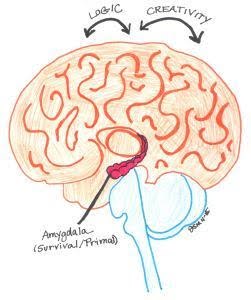 What does this mean as a parent?
You may notice that once your child is upset, it is difficult to get through to them, or nothing may help the situation. Daniel Goleman, the author of Emotional Intelligence, refers to this as your child’s brain being “hijacked.”2 When the brain is hijacked and in a stress response, your attempts at resolving the situation with problem-solving, reasoning, bribes, or threats will do little to solve the current conflict or change your child’s behavior. Effective problem-solving requires logic, language, and creativity, though none can be well utilized when greatly upset. While in a stress response state, your child cannot access the part of their brain, the prefrontal cortex, that engages in reasoning.
How you can help
When your child becomes dysregulated, the first step is to help them return to a calm space before problem-solving or correction. Remember, helping your child calm down does not mean that you are condoning misbehavior. Correction can take place after your child has returned to a calm place.
When your child is calm, you can get them thinking about ways to manage daily stress by asking open-ended questions. Open-ended questions help prompt your child’s thinking. You’ll also better understand their thoughts, feelings, and stress-related challenges. In gaining input, your child
- develops awareness about how they are thinking and feeling and understands when the cause of their upset is stress-related and
- can think through and problem-solve challenges they may encounter ahead of time.
Actions
When your child is calm, engage them in a conversation to understand your child’s thoughts and feelings. You could ask:
- “When do you feel stressed?”
- “When do you feel uncomfortable, frustrated, worried or angry?” (These feelings can occur to mask underlying stress.)
- “What time of day?”
- “What people, places, and activities are usually involved?”
- You may reflect on a moment when your child was in their stress response or their “hijacked” brain. For example: “When I asked you to clean up your room, you became very upset. What was going on for you?”
Asking questions does not mean you agree with or approve of your child’s behavior. However, curiosity can provide additional information that will allow you to problem-solve, reduce conflict, and help you brainstorm ways to manage stress-related challenges.
- Practice actively listening to your child’s thoughts, feelings, and worries. Though you may want to fix your child’s problem quickly, it’s important to listen first. Seeing your child in distress can be deeply uncomfortable. However, sitting in that discomfort with your child and allowing them to use their coping and critical problem-solving skills to help them thrive is essential. Finding out whether or not your child is stressed is done by offering a safe space for them to talk about their worries without fearing judgment.
- Paraphrase what you heard your child say. Paraphrasing is echoing back to the person a summary of what they’ve said to check how accurate your listening is. It also confirms to your child that you have heard them. A conversation might go something like this:
- Child: “I just found out my classmates are in a secret recess club, and I’m not. They don’t like me.”
- Parent or those in a parenting role modeling paraphrasing: “So I hear you found out that your classmates have a club at recess that you are not a part of. Is that right?” If you hear a subtext of feeling, as in this example, you can also reflect the feeling implied. Parent reflecting feeling: “I get the sense you are feeling sad about being left out. Is that right?”
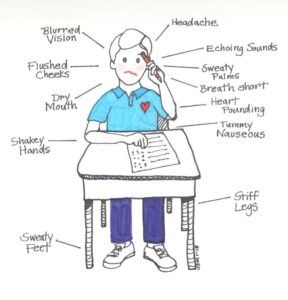 Explore the mind-body connection. In calmer moments with your child, ask, “How does your body feel now?” See how descriptively they can list their physical signs of well-being. Now ask, “How does your body feel when you are feeling stressed?” Every person’s physical experience will be different. Find out how your child feels and make the connection between those symptoms and the typical feelings they are having.
Tip: Be sure you talk about stress at a calm time when you are not stressed!
There are many daily opportunities to teach your child new skills to manage stress and worries. Learning about what is developmentally appropriate at each age will help you better understand what your child is experiencing and work hard to learn. This also provides context to understand how you can best support their skill-building.
- Five-year-olds are working hard to understand how things work, so they appreciate explanations and they ask lots of questions. They have vivid imaginations, creating worries that parents or those in a parenting role may not understand. Children in this stage may find it difficult to see others’ perspectives. They are learning rules and want to help, cooperate, and follow them, but may get upset or disappointed when they do not understand a rule. They may also begin to test rules.
- Six-year-olds want to do well in school and home, which may cause stress. They may be highly competitive and criticize peers while being sensitive to being criticized themselves. They care about friendships and may have worries related to those relationships. They may be clumsy sometimes and require more time for fine and large motor skill activities.
- Seven-year-olds need consistency and may feel stress more when schedules are chaotic and routines change. They tend to be moody and require reassurance from adults. They take school and homework seriously and may even feel sick from worrying about tests or assignments.
- Eight-year-olds’ interest and investment in friendships and peer approval becomes as important as the teacher’s approval. They are more resilient when they make mistakes. They have greater social awareness of local and world issues and may be concerned about the news or events outside your community.
- Nine-year-olds can be highly competitive and critical of themselves and others. They may worry about who is in the “in” and “out” crowds and where they fit in friendship groups. They may exclude others to feel included in a group, so it’s an excellent time to encourage inclusion and kindness toward a diverse range of peers.
- Ten-year-olds have an increased social awareness to try to figure out the thoughts and feelings of others. With this awakening comes a newfound stress about what peers think of them (“He’s staring at me. I think he doesn’t like me.”).
It is important to remember that teaching is different than just telling. Because stress is a part of everyday life, teaching our children how to manage everyday stressors is important. Teaching grows basic skills and problem-solving abilities and prepares your child for success. Teaching also involves modeling and practicing the positive behaviors you want to see, promoting skills, and preventing problems.
Actions
- Model the skills yourself, and your child will notice and learn.
- Get exercise and fresh air. Getting active, whether walking or gardening, can help relieve stress.
- Remember to breathe. Make a daily routine of taking 5-10 deep breaths to help you begin the morning calm and focused. If you run into stressful situations during the day, remember to breathe deeply amid the chaos to help yourself better cope.
- Create quiet time. Busy schedules with children are inevitable. However, everyone needs quiet time to refuel. Say “No” to social commitments when it’s too much. In addition to guarding your children’s quiet time, be sure to carve out your own.
- Set a goal for daily connection. Touch can deepen intimacy in any relationship. It creates safety, trust, and a sense of well-being. It offers health benefits as well. A study found that those who hugged more were more resistant to colds and other stress-induced illnesses.3
- Notice, name, and accept your feelings regularly. You may get in the habit of reassuring family members or friends, “I’m fine,” even when you are not. Yet, you need to be a model of emotional intelligence if your children are to learn to manage their feelings. Notice what you are honestly feeling and name it. “I’m tired and cranky this afternoon.” Accepting those feelings instead of fighting them can be a relief and allow you to take action toward change.
- Ask, “What is my child developmentally ready to try?” Allow for healthy risks. Realize it will not always be done perfectly or in the ways you expect. Trust your child’s ability to solve their problems with your loving support.
- Brainstorm coping strategies. You and your child can use numerous coping strategies depending on what feels right. When you are feeling stressed, it can be challenging to recall what will make you feel better. That’s why brainstorming a list, writing it down, and keeping it at the ready can come in handy when your child needs it. For example, your child could imagine a favorite place, take a walk, drink water, take deep breaths, count to 50, draw, color, or build something. For an easy-to-print illustration, check out Confident Parents, Confident Kids’ Coping Strategies for K-4.
- Design a plan. When you’ve learned about what happens in your brain and body when stress takes over, you know you need a plan so you don’t have to think at that moment. What will you say when upset? Where will you go? Following your plan is a positive way to model coping strategies for your child.
- Work on your child’s feelings vocabulary. Sometimes, parents or those in a parenting role must become feelings detectives. You must dig for clues if your child shuts down and refuses to tell you what’s happening. Though your child has been speaking for some time, they take longer to develop their feelings vocabulary. They hear feelings in daily conversations less frequently than thoughts or other expressions. Being able to identify feelings is the first step to being able to manage them successfully.
- Create a calm-down space. During playtime or time without pressure, involve your child in designing a “safe base” or place where your child decides they would like to go when upset to feel better. Maybe their calm-down space is a beanbag chair in their room, a blanket, or a special carpet in the family room. Thinking about what appeals to the five senses can be helpful when making a calm-down space. Engaging the senses helps to bring your child back into the present moment when upset. Include your child in thinking through items that appeal to your child’s sense of touch, sight, smell, taste, and sight.
- Is your child uttering the same upsetting story more than once or repeatedly analyzing problems or concerns? You could compassionately talk with your child about repetitive thoughts and how they can make them feel more distressed instead of solving a problem. A possible conversation could be: “Hey, I’ve noticed you’ve been discussing this problem a lot lately. Can I tell you a little bit about how our amazing brains work? Our brains are powerful. They help us figure out how to solve problems and create great imaginary stories. Sometimes, though, our brains can get stuck thinking about a problem repeatedly in an attempt to solve it. Our brain is trying to help us! But, sometimes, having those thoughts repeatedly can make us feel even more lousy. Can we talk about things that help your brain take a break when stuck in these thoughts? I noticed you had much fun playing with your friend on the trampoline. Do you find it easier not to think about these things then? Maybe we can think of something loving you could say to yourself when you find your brain is repeating worries?”
- Set aside undistracted time to connect with your child daily. Regular connection helps to calm your child’s nervous system, allowing them to cope better with difficult situations.
- Create a family gratitude ritual. People get many negative messages daily through the news, performance reviews at school or work, and challenges with family and friends. It can seem easier to complain than to appreciate. Balance out your daily ratio of negative to positive messages by looking for the good in your life and articulating it. Model it and involve your children. This is the best antidote to a sense of entitlement or taking your good life for granted while wanting more and more stuff. Psychologists have researched gratefulness and found that it increases people’s health, sense of well-being, and ability to get more and better sleep at night.4
Tip: Deep breathing is not just a nice thing to do. It decreases the chemicals that have flowed over your brain and allows you to regain access to your creativity, language, and logic versus staying stuck in your primal brain. Practicing deep breathing with your child can offer them a powerful tool to use anytime, anywhere, when they feel stressed.
Step 3 Practice to Grow Skills and Develop Habits
Daily conversations allow your child to practice vital new skills if you seize those chances. Practice grows vital new brain connections that strengthen (and eventually form habits) each time your child works hard to practice essential stress management skills.
Practice also provides important opportunities to grow self-efficacy — a child’s sense that they can do a task or skill successfully. This grows confidence. It will also help them understand that mistakes and failures are part of learning.
Actions
- Use “Show me…” statements with a positive tone and body language to express excitement and curiosity. When a child learns a new ability, they are eager to show it off! Give them that chance. Say, “Show me how you use your safe base to calm down.” This can be used when you observe their stress mounting.
- Practice your plan! Be sure to try out your plan for managing stressful situations in smaller-scale ways. In other words, could you do a dry run — walk to school and be in the environment to act out your plan before the other kids arrive for school? This dry run practice can make all the difference in assisting your child when their most challenging times arise.
- Brainstorming with your child about how you can be helpful when they are feeling stressed can be beneficial. Solutions you brainstorm together are more likely to be utilized in times of stress and less likely to be pushed away when your child needs help.
- Recognize effort using “I notice…” statements like, “I notice how you took some deep breaths when you got frustrated. That’s excellent!”
- Include reflection on the day in your bedtime routine. Bedtime is often a key time for parent-child connections and can also be when your child’s big feelings and responses to accumulated stress show up. Consider the following strategies to help your child feel seen and heard, and help your child feel supported before sleep:
- You could start a conversation with your child by asking about their high (favorite part of the day) and low (least favorite part) of the day. Sharing highs and lows allows your child to share difficult moments and reflect on their day’s bright spots.
- When your child shares their challenges, listen and offer comfort. While you may have a good idea of how your child could address their concerns, try to use this time to listen. Save problem-solving for the next day. You may say, “Right now, I am here to listen. Would it be okay if I checked in tomorrow, and maybe we could talk about ways to help you with these challenges?”
- If you find that your child has a difficult time setting worries aside to allow for sleep, consider these interventions:
- Start your bedtime routine 15-20 min earlier to give your child the time to talk without you feeling rushed to get them to sleep.
- After your child has your listening attention for some time, you may say,
- “I can tell this is important to you. Let’s talk tomorrow about some ideas that may help. Now it is time to sleep so your thinking brain can get the rest it needs to problem solve.” Or
- “I can tell you still have a lot on your mind. If you think of things after I leave, you can write them down in this journal and share them with me in the morning.”
- At the end of your time together, a ritual before you leave the room could help your child set aside their worries for the evening. For example, you and your child could pretend to gather all their worries and place them in a “worry box” you take out of the room at night. The worry box could be a found item or an art project you work on with your child.
- Check in the next day to engage in problem-solving with your child. However, sometimes, things that feel big at bedtime may no longer feel so big the next day. That does not mean your child’s problem was not real or meaningful, but rather your listening and a good night’s sleep may have provided the needed soothing and perspective.
- Proactively remind: If your child is entering a situation you think may induce stress or anxiety, you can proactively remind them of your plan for managing anxiety. If your reminders result in angry or annoyed pushback from your child, remember to revisit making a plan together and ask your child how you can be most helpful in difficult moments. Your child is more likely to accept your help and support if they were part of creating a plan with you.
Step 4 Support Your Child’s Development and Success
At this point, you’ve taught your child some new strategies for managing stress so that they understand how to take action. You’ve practiced together. You can offer support when needed by reteaching, monitoring, and coaching. Parents or those in a parenting role naturally provide support as they see their child fumble with a situation in which they need help. This is no different.
Actions
- Ask key questions to support their skills. For example, “You have a test coming up today. Do you remember how to help yourself if you feel stressed?”
- Learn about development. Each new age will present differing challenges and, along with them, stress. Becoming informed regularly about what developmental milestones your child is working toward will offer you empathy and patience.
- Reflect on outcomes. “Seems like you couldn’t sleep last night because you had so much on your mind. Did you have a hard time paying attention in class? What could we do tonight to help?”
- Stay engaged. Working together on ideas for trying out new and different coping strategies can offer additional support and motivation for your child when challenging issues arise.
Support Stability. Predictability and routine at home can be a stabilizing force for children who experience anxiety or in times of stress. Consider establishing a bedtime routine. Ideas for a routine are starting with your child bathing, reading with you, and then having time with you to reflect on the day. Having a regular connection point with your child will also help reduce your child’s stress load.
No matter how old your child is, your positive reinforcement and encouragement have a significant impact.
If your child is working to grow their skills – even in small ways – it will be worthwhile to recognize it. Your recognition can go a long way in promoting positive behaviors and expanding your child’s confidence. Your recognition also encourages safe, secure, and nurturing relationships — a foundation for strong communication and a healthy relationship with you as they grow.
There are many ways you can reinforce your child’s efforts. It is essential to distinguish between three types of reinforcement – recognition, rewards, and bribes. These three distinct parenting behaviors have different impacts on your child’s behavior.
Recognition occurs after you observe the desired behavior in your child. Noticing and naming the specific behavior you want to reinforce is key to promoting more of it. For example, “When you got frustrated with your homework, you told me how you felt and took deep breaths. Yes! Excellent.” Recognition can also include nonverbal encouragement such as a smile, high five, or hug.
Rewards can be helpful in certain situations by providing a concrete, timely, and positive incentive for doing a good job. A reward is determined ahead of time so that the child knows what to expect, like “If you finish your homework before dinner, we will have time for a bike ride after dinner .” (if you XX, then I’ll XX) It stops any negotiations in the heat of the moment. A reward could be used to teach positive behavior or break a bad habit. The goal should be to help your child progress to a time when the reward will no longer be needed. If used too often, rewards can decrease a child’s intrinsic motivation.
Unlike a reward, bribes aren’t planned ahead of time and generally happen when a parent or those in a parenting role is in the middle of a crisis (like in the grocery store checkout line and a child is having a tantrum. To avoid disaster, a parent or those in a parenting role offers to buy a sucker if the child stops the tantrum). While bribes can be helpful in the short term to manage stressful situations, they will not grow lasting motivation or behavior change and should be avoided.
Trap: It can be easy to use bribes when recognition and occasional rewards are underutilized. If parents find themselves resorting to a bribe frequently, it is likely time to revisit the 5-step process.
Trap: Think about what behavior a bribe may unintentionally reinforce. For example, offering a sucker if a child stops a tantrum in the grocery store checkout line may teach the child that future tantrums lead to additional treats.
Actions
- Recognize and call out when it is going well. It may seem obvious, but it’s easy not to notice when everything moves smoothly. Noticing and naming the behavior provides the necessary reinforcement that you see and value your child’s choice. For example, a short, specific call-out is needed when children practice calm-down strategies: “I noticed that you spent some time in your calm-down space and then talked to me about your day. Yes! Excellent.”
- Recognize small steps along the way. Don’t wait for the significant accomplishments – like your child practicing calm down strategies independently – to recognize effort. Remember that your recognition can work as a tool to promote more positive behaviors. Find small ways your child is making an effort and let them know you see them.
- Build celebrations into your routine. For example, “We’ll finish our bedtime routine first, and then we can snuggle up to a good book and talk about our reflections from the day.”
Closing
Engaging in these five steps is an investment that grows your skills as an effective parent or those in a parenting role to use on many other issues and grows essential skills that will last a lifetime for your child. This tool allows children to become more self-aware, deepen their social awareness, exercise their self-management skills, work on their relationship skills, and demonstrate and practice responsible decision-making.
Additional Resources for More Intense Forms of Stress — Adverse Childhood Experiences, Anxiety, and Depression
If there are high emotions in your household most days, most of the time, then it may be time to consider outside intervention. Physical patterns (like anxiety or depression) can set in that require the help of a trained professional. Seeking help from a mental health professional is the same as going to your doctor for a physical ailment. It is very wise to seek outside help. The following are some U.S.-based resources to check out.
- American Academy of Child & Adolescent Psychiatry (AACAP)
- Has definitions, answers to frequently asked questions, resources, expert videos, and an online search tool to find a local psychiatrist. http://www.aacap.org
- American Academy of Pediatrics (AAP) Healthy Children
- Provides information for parents about emotional wellness, including helping children handle stress, psychiatric medications, grief, and more. http://www.healthychildren.org
- American Psychological Association (APA)
- Offers information on managing stress, communicating with kids, making stepfamilies work, controlling anger, finding a psychologist, and more. http://www.apa.org
- Association for Behavioral and Cognitive Therapies (ABCT)
- Provides free online information so that children and adolescents benefit from the most up-to-date information about mental health treatment and can learn about important differences in mental health supports. Parents or those in a parenting role can search online for local psychologists and psychiatrists for free. http://www.abct.org
- National Institute of Mental Health